Wholesale Custom Men's Streetwear T-Shirts
A B2B production route for brands and wholesale buyers who need custom men's streetwear T-shirts with a consistent fit block, approved graphics, private-label trims and bulk-ready packing.
Built For Commercial Buying Decisions
Wholesale buyers often need a repeatable program rather than a single custom sample. This page is for clothing brands, multi-store retailers, online sellers and buying teams that need a clear factory brief for a collection or replenishment order.
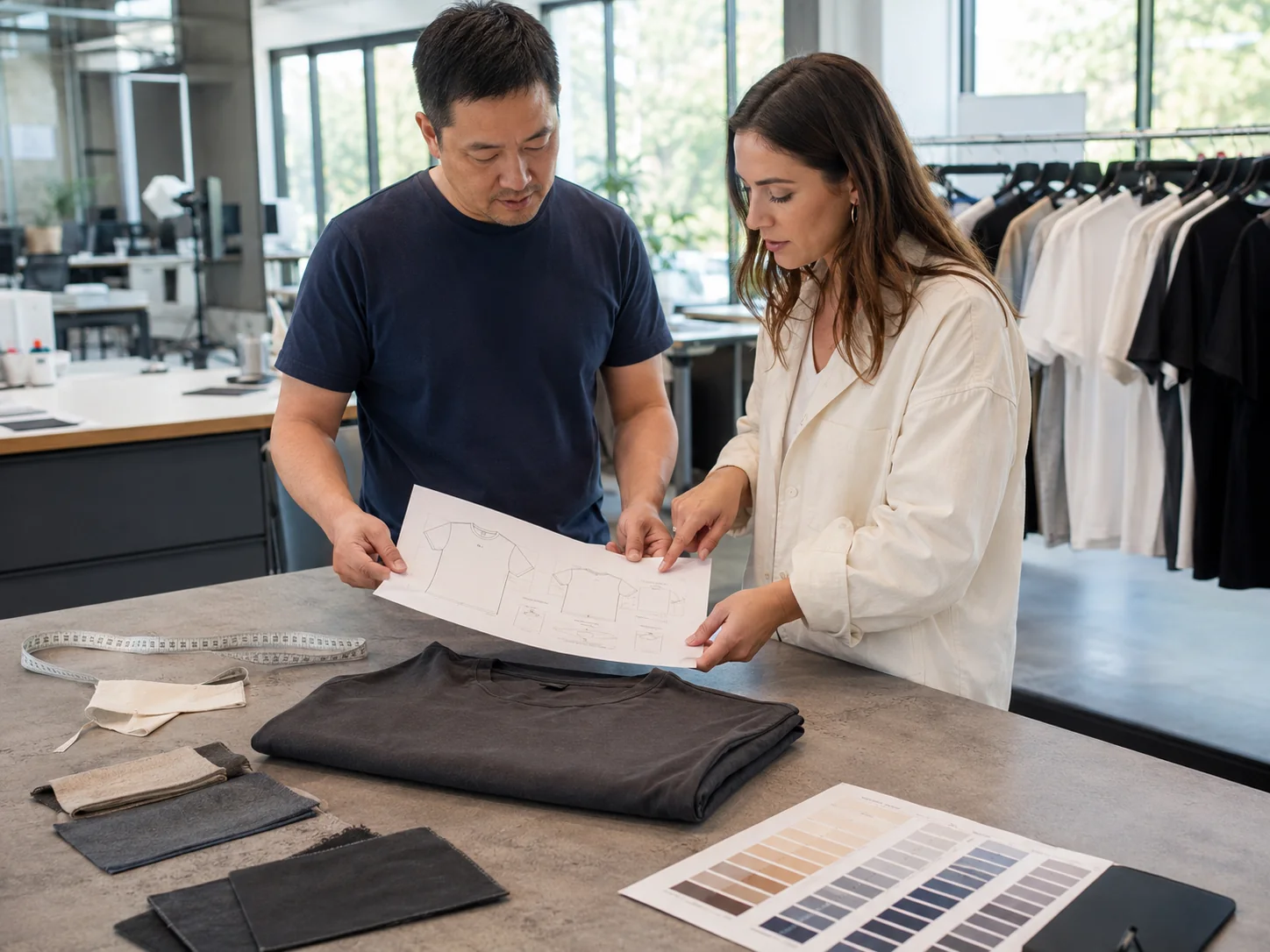
Start with the approved fit, fabric weight, color range, artwork, size ratio, label system and delivery market. Keeping those decisions in one production file makes repeat orders more consistent and helps buyers compare unit-cost changes when quantity, decoration or packing changes.
Quote-Ready Information
- Target quantity and size ratio
- Fabric composition, GSM and color direction
- Artwork, print method and placement
- Fit reference or measurement chart
- Labels, packaging and delivery country
What Buying Teams Can Review
Collection Planning
Confirm core styles, colorways, size ratios and the selling season before bulk fabric is reserved.
Sample To Bulk
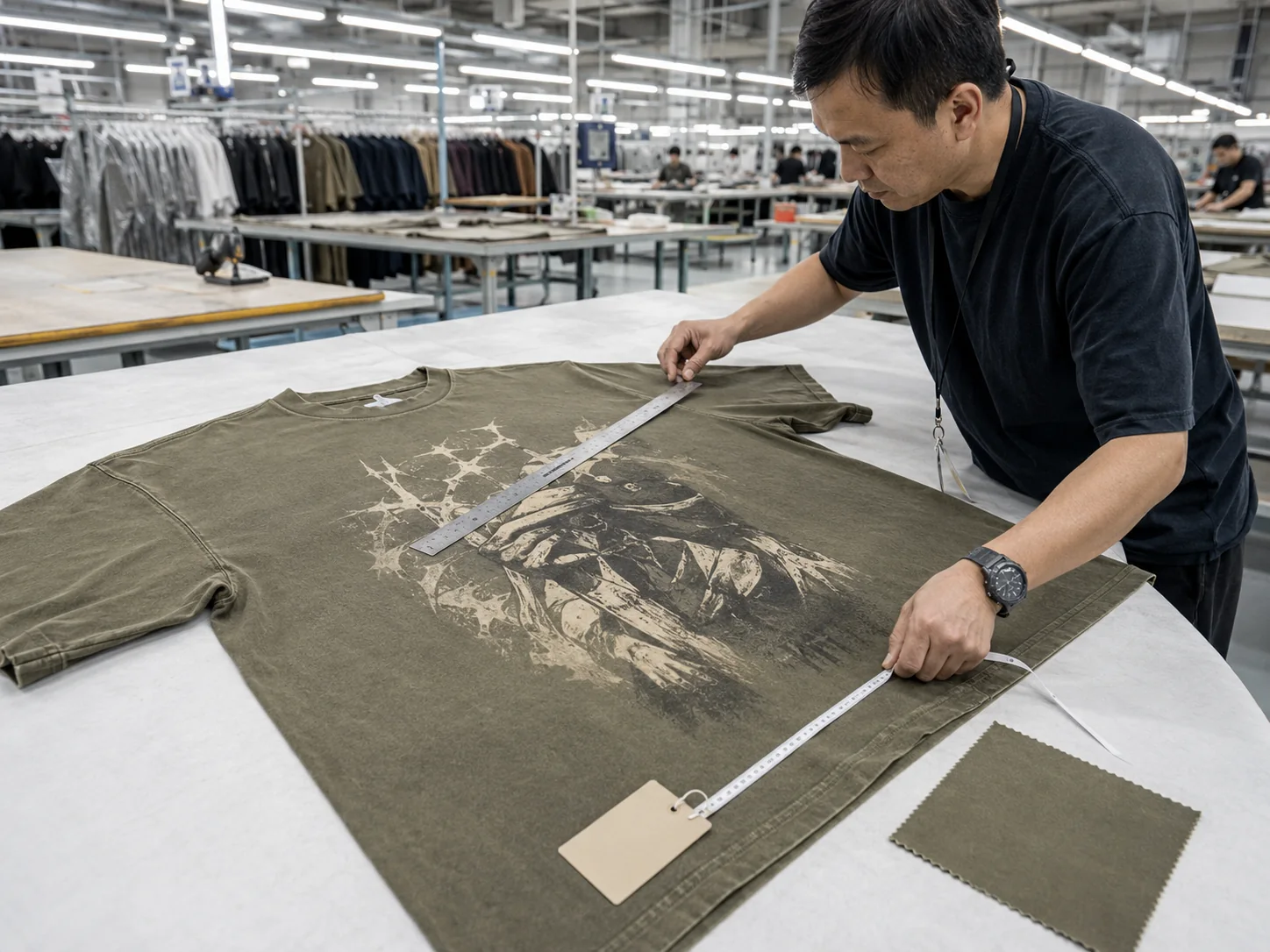
Approve fit, print placement, trims and packed presentation on a physical sample before production.
Wholesale Packing
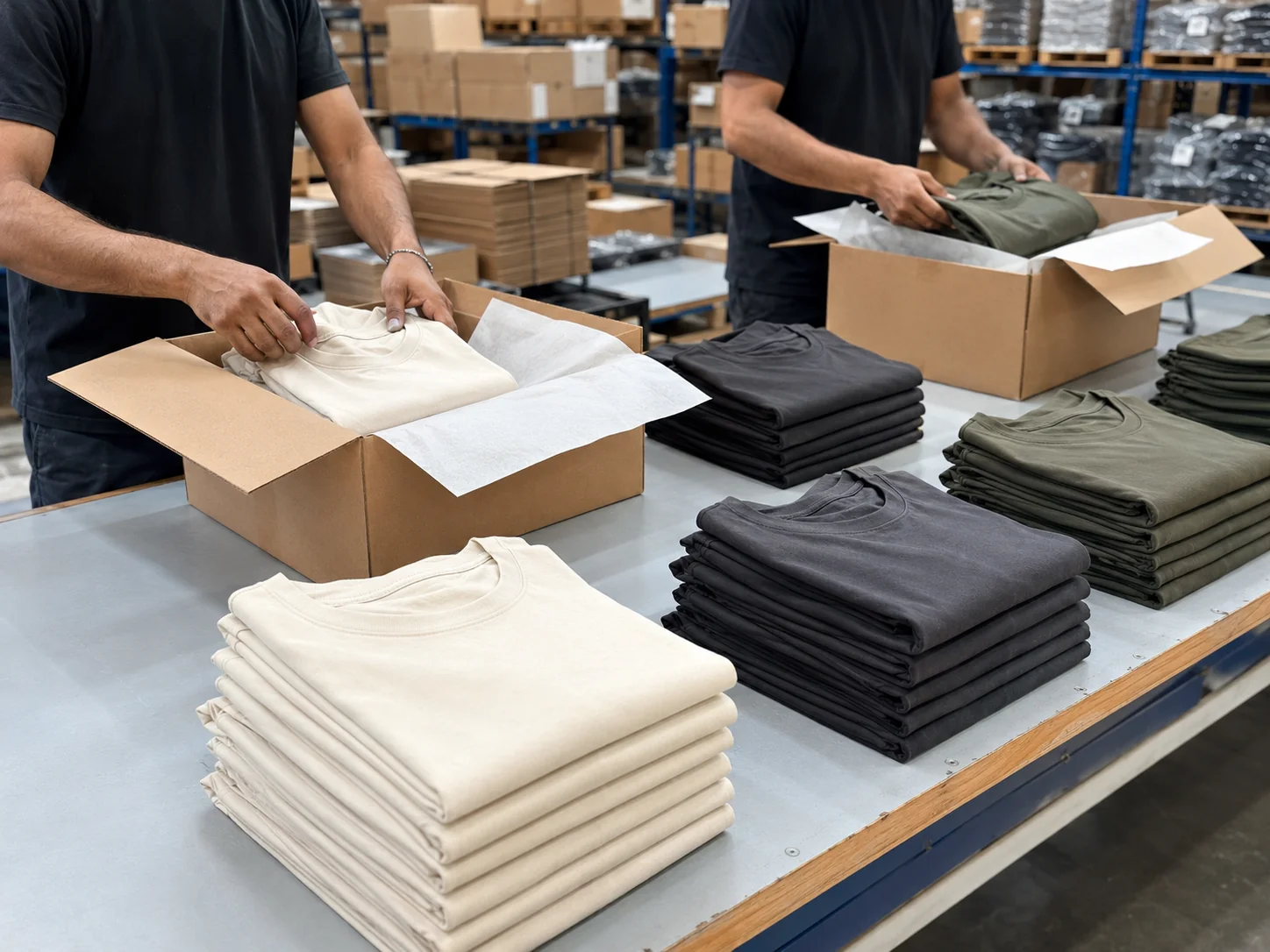
Plan polybags, size stickers, carton quantities and shipping marks around warehouse receiving needs.
Use the export packing and warehouse receiving checklist to document size assortments, unit identification and carton records before packing approval.
Wholesale Custom T-Shirts: First Orders And Reorders
Plan a made-to-order production run, not a purchase from a ready-to-ship stock list. Specify whether the order is undecorated, printed, washed or fully private-labelled, and whether all styles should ship together. Product references do not establish stock availability; pricing and shipment arrangements require a confirmed quotation.
Make The Order Quantity Usable
Send quantities by style, color and size, not only a total order quantity. Production-friendly standard styles can start from 50 pieces per color, subject to project review; wash and custom dyeing usually start from 50 pieces per color. Different colors cannot be pooled to meet a color minimum. Review quantity allocation and separate trim minimums before splitting a small run across more designs or colors.
| Order route | Reference to provide | Confirm before production |
|---|---|---|
| First production run | Current tech pack, artwork and trim versions, with the proposed size and color quantities. | Sample approval, unresolved specifications, quotation scope and the agreed production schedule. |
| Same-design reorder | Approved garment and trim references, previous file versions and the new quantity matrix. | Material availability, color-lot comparison, current minimums and pricing. A prior order does not reserve identical stock or keep its quotation valid indefinitely. |
| Reorder with changes | A change list identifying any new fabric, color, fit, artwork, label or packing instruction. | Which changes require a new proof or sample, revised costs and timing. Keep unchanged and newly approved specifications identifiable. |
Request garment unit prices and any separate development, setup, trim, packing and freight charges. Compare quantity options against the same specification using the factory quote comparison worksheet; a lower unit price with different fabric or packing is not a like-for-like saving.
When you request a bulk-order review, include the quantity matrix, reference versions, change list and delivery destination. Mark undecided items as needing confirmation instead of treating the previous order or a catalog image as automatic approval.
Retail And Distribution Orders
Connect the assortment, unit packing and warehouse requirements in one quotation brief. Define the target customer, selling season, fit and price band, then check the finished order at garment, individual-pack and carton level against the signed sample and purchase specification.
| Decision area | Confirm and send with the brief |
|---|---|
| Assortment | A matrix of pieces by style, color and size, with the approved size ratio and product roles. |
| Unit identification | Care and size labels, hangtags, stickers or barcodes where required, plus artwork, dimensions, positions and individual-pack instructions. |
| Carton and receiving | Units per carton, solid or assorted packing, outer marks, warehouse references, carton-mark files and destination details. |
| Quotation and release | Fabric, GSM, fit, decoration, trims, quantity and launch window in one tech pack or annotated brief. Compare measurements, decoration and packing with the approved reference before dispatch. |
From Brief To Packed Order
Commercial FAQ
Can retailers develop exclusive custom T-shirt designs?
Yes. Retail buyers can develop their own artwork, fit direction, fabric, labels and packing through the sample process.
Can wholesale buyers use their own streetwear artwork?
Yes. Buyers can provide artwork, placement files and brand references for sample review before bulk production.
What should a wholesale custom T-shirt brief include?
Include target quantity, styles, size ratio, fabric GSM, artwork, decoration method, labels, packaging and delivery country.
Can one order include private-label trims and export packing?
Yes. Neck labels, care labels, hangtags, polybags, size stickers and carton marks can be planned with the production order.
Related Buyer Paths
OEM T-Shirt Manufacturing
Review the OEM workflow from brief to packing.
Private Label T-Shirts
Plan brand labels, hangtags and packaged presentation.
Streetwear Manufacturing Cost
Prepare a better bulk-production budget.
Plan A Commercial T-Shirt Program
Send your product brief, expected quantity, size ratio, fabric direction, artwork, labels, packing requirements and delivery market for a practical production review.
Send Project Details